
Americans Are Using AI Like a Life Assistant, Not a Tech Toy
AI didn't creep into daily life quietly. It burst onto the scene, quickly became part of our routines, and then stayed. Now it's become part of how we think through decisions, manage stress, navigate relationships, and get through everyday moments we once muddled through on our own. When we get stuck writing an email, helping a child with homework, or dealing with a complex personal situation, many of us don't scroll endlessly or phone a friend for an answer. We open an AI tool instead.
To learn more about how AI fits into real people's daily routines, we surveyed 2,000 U.S. adults who identify as AI users. What we found highlights the extent to which AI has become an integral part of everyday decision-making, drawing attention to a complex relationship marked by a cocktail of convenience, trust, and hesitation.
Key Findings
- 88% of AI users describe it as something they rely on regularly
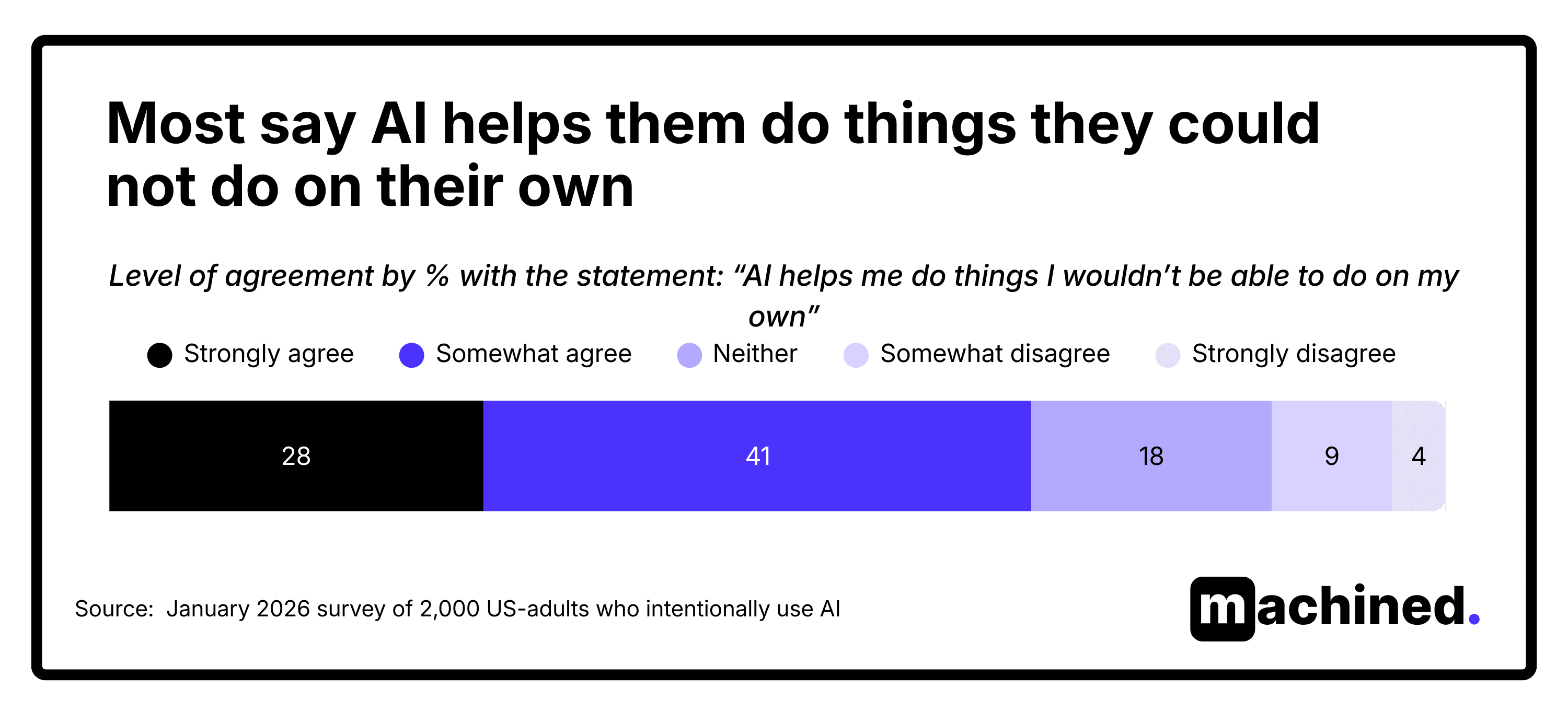
- About 7 in 10 say AI helps them do things they wouldn't be able to do on their own
- 46% have downplayed their AI usage to friends or family
- Roughly two-thirds, 64%, have used AI to learn a new skill
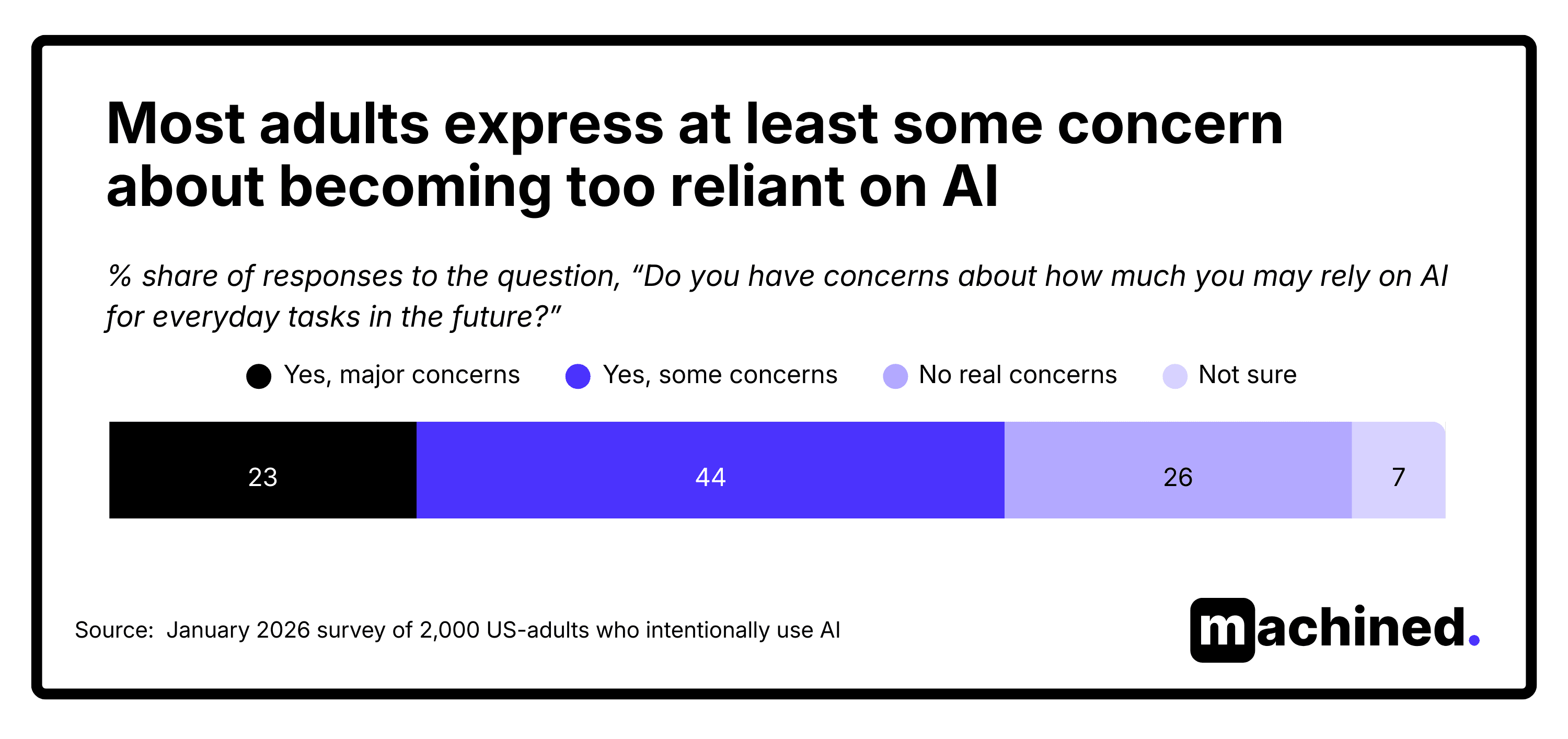
- Still, 67% have at least some concern about how much they expect to rely on AI in the future
How Often Americans Use AI
AI use is frequent for a substantial share of adults. Nearly one-third of respondents (31%) say they interact with AI tools multiple times per day, while another 15% report using AI once daily. An additional 17% say they use AI multiple times per week. Only 37% describe their use as infrequent.
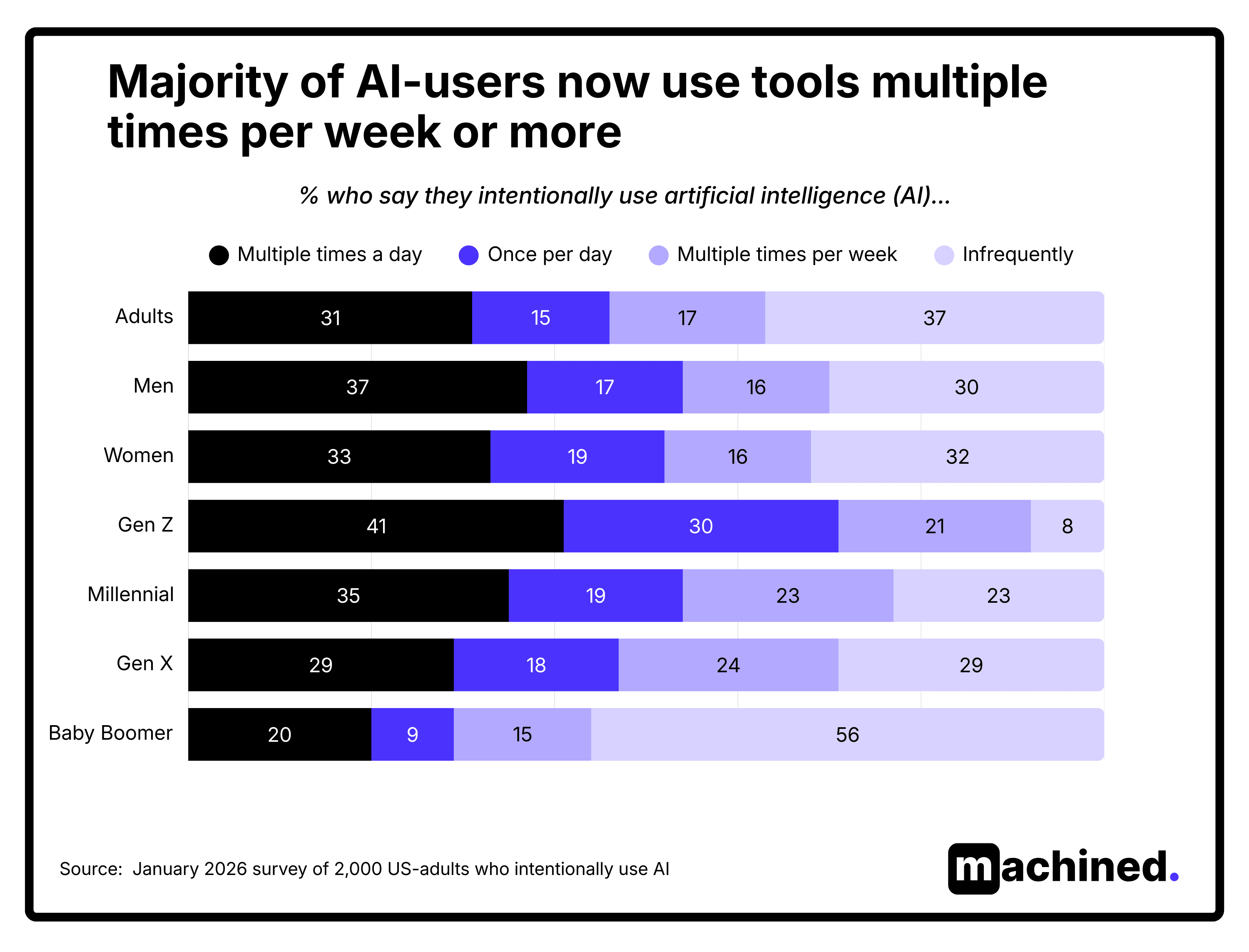
Usage varies by age. Gen Z adults report the highest frequency of interaction, with 41% saying they use AI multiple times per day and just 8% reporting infrequent use. Among millennials, 35% report multiple daily interactions. Usage is lower among Gen X and baby boomers, though daily use remains present across all age groups.
The Role AI Plays In Everyday Life
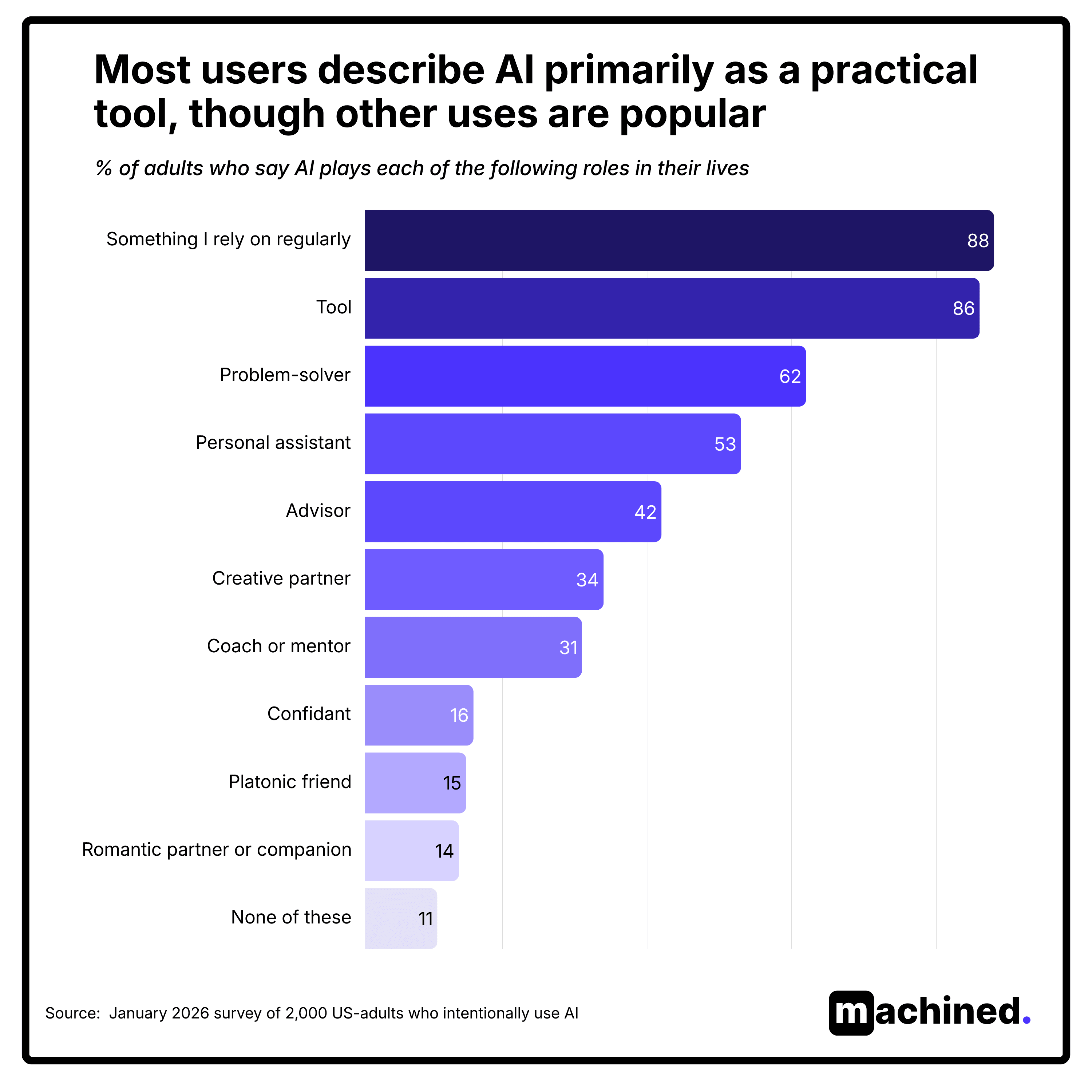
Most respondents describe AI as a functional and regularly used resource. Eighty-eight percent say AI is something they rely on regularly, and 86% describe it as a tool. Beyond this, many attribute more specific roles to AI:
AI as a First Source Of Help
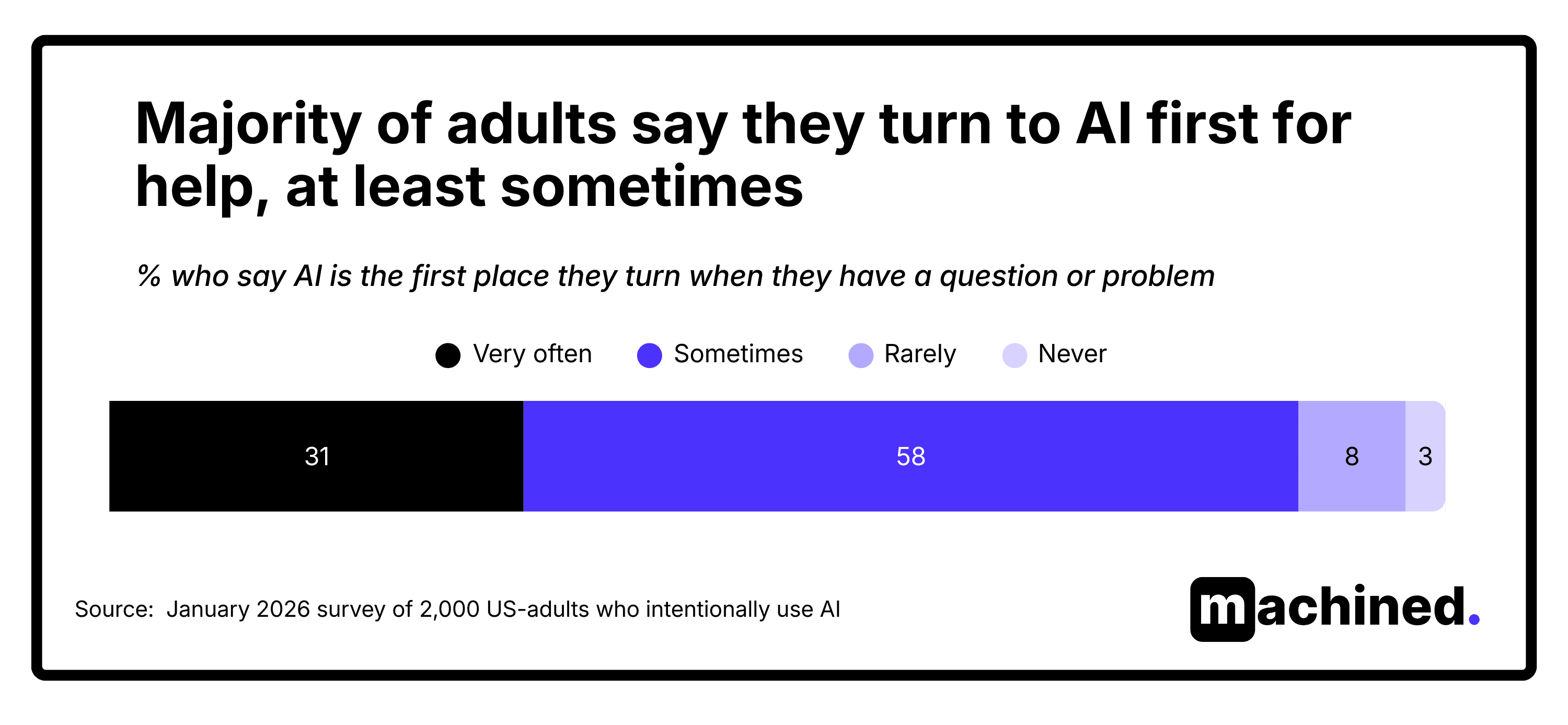
AI is often used as an initial point of reference when questions or problems arise. Thirty-one percent of respondents say AI is very often the first place they turn, while 58% say this is sometimes the case. Only 11% say they rarely or never start with AI.
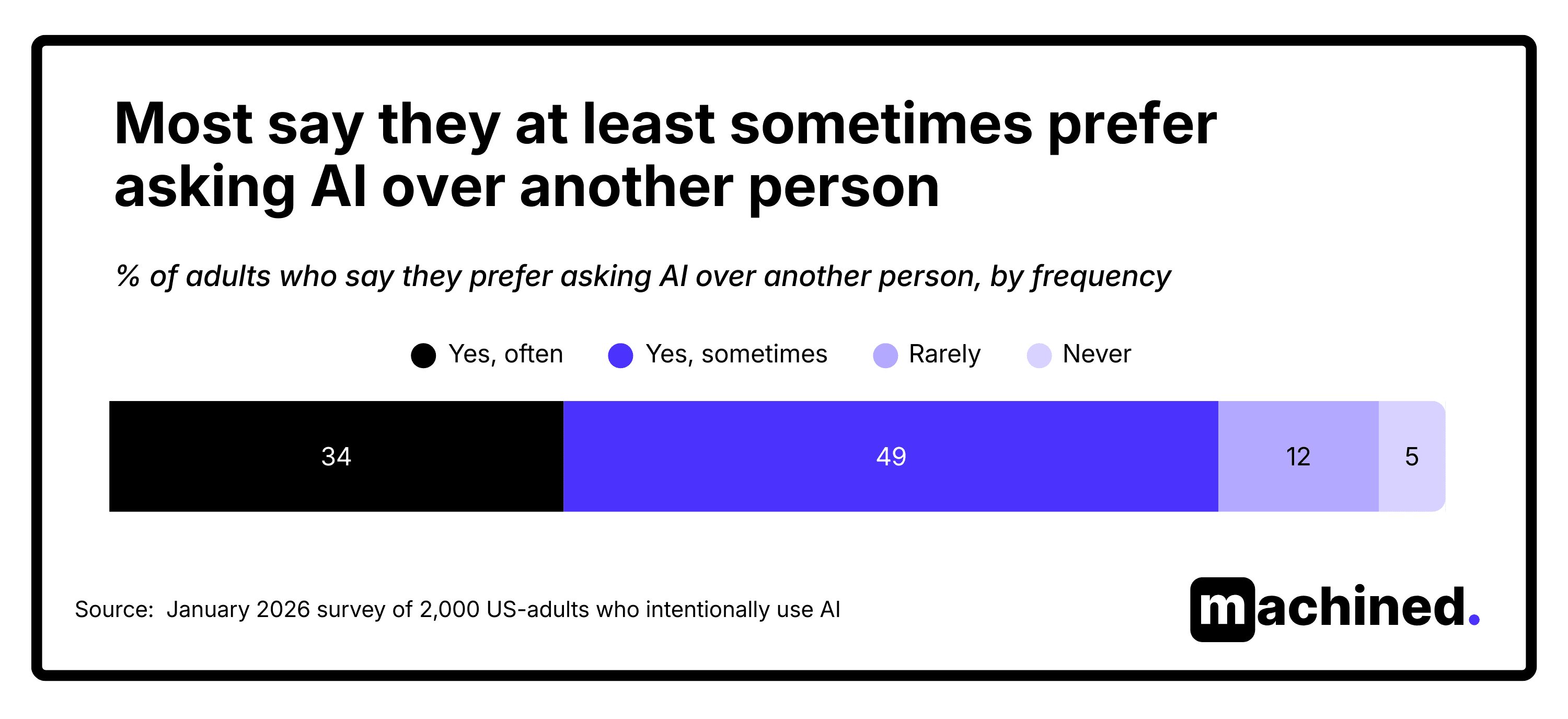
When asked, 83% say there are situations where they prefer asking AI over asking another person, at least occasionally. This suggests AI is frequently used as a preliminary source of information or guidance before seeking human input.
Confidence, Support, and Perceived Impact
Most respondents report that AI provides meaningful practical benefits. Sixty-nine percent say they agree that AI helps them do things they would not be able to do on their own, including 28% who strongly agree. Fewer than one in seven disagree with this statement.
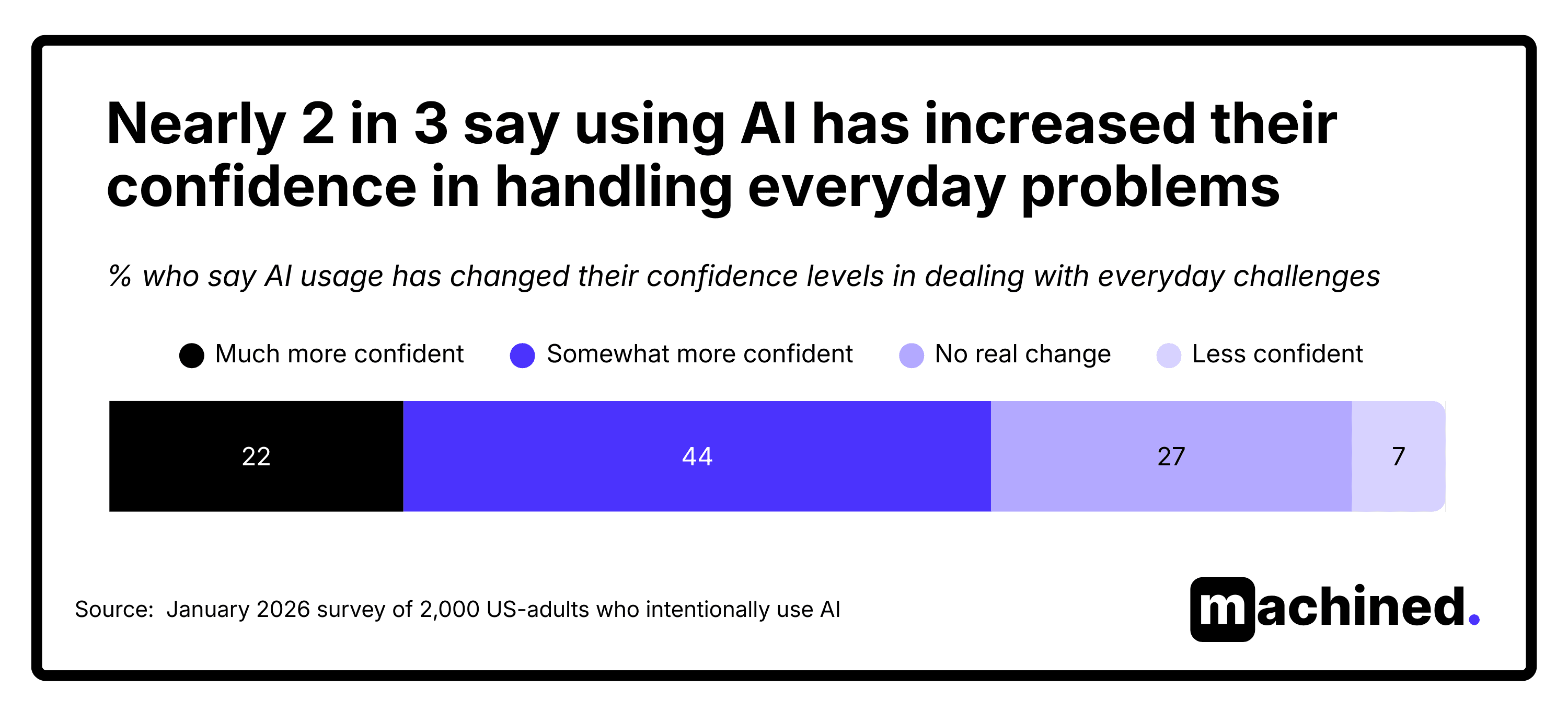
These perceived benefits are reflected in reported confidence. Sixty-six percent say using AI has made them more confident in handling everyday problems, including 22% who say it has made them much more confident. About one-quarter say AI has made no real difference to their confidence, while 7% say it has made them less confident.
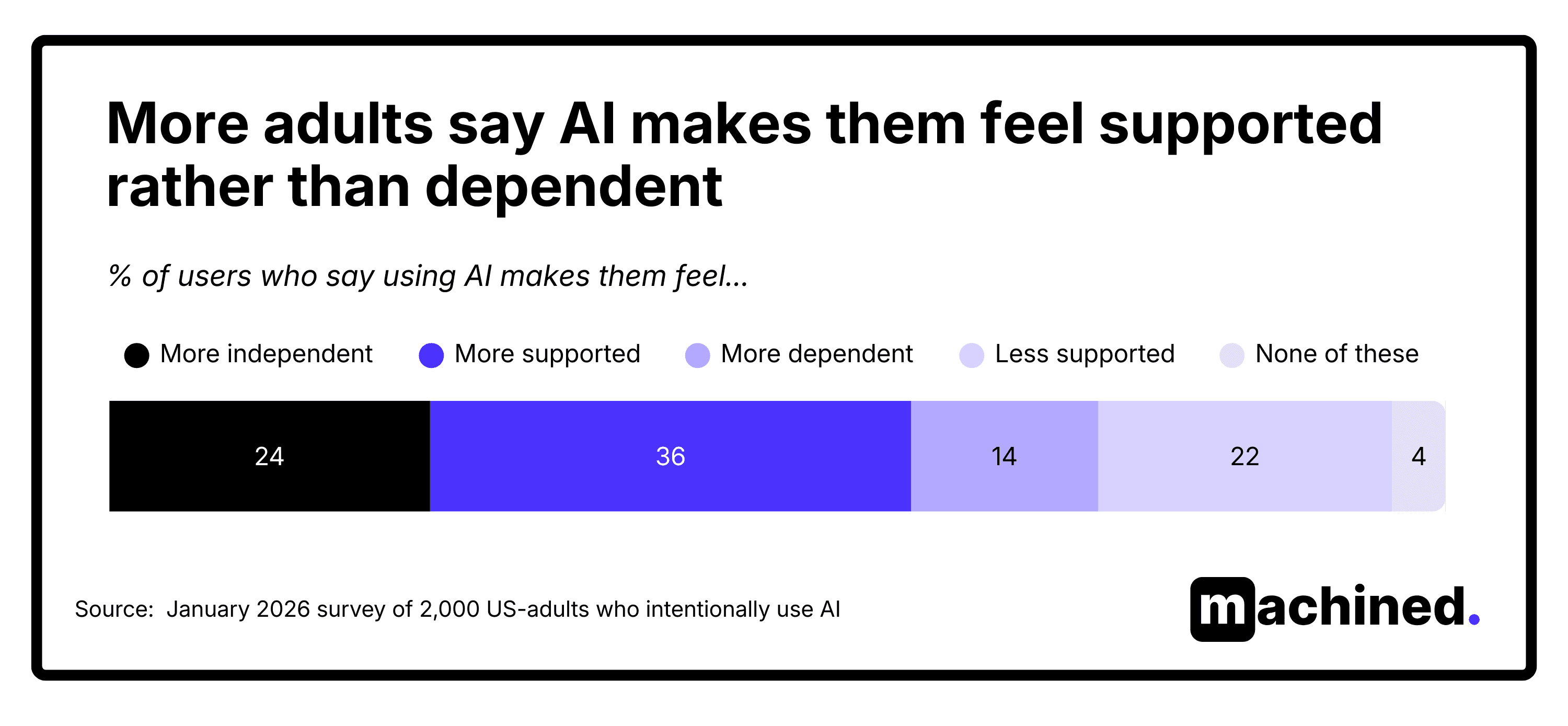
When asked more broadly how AI affects them overall, respondents are more likely to describe supportive or empowering effects than dependency. Thirty-six percent say AI makes them feel more supported, and 24% say it makes them more independent. By comparison, 14% say AI makes them more dependent, while 22% say it produces a mix of these effects.
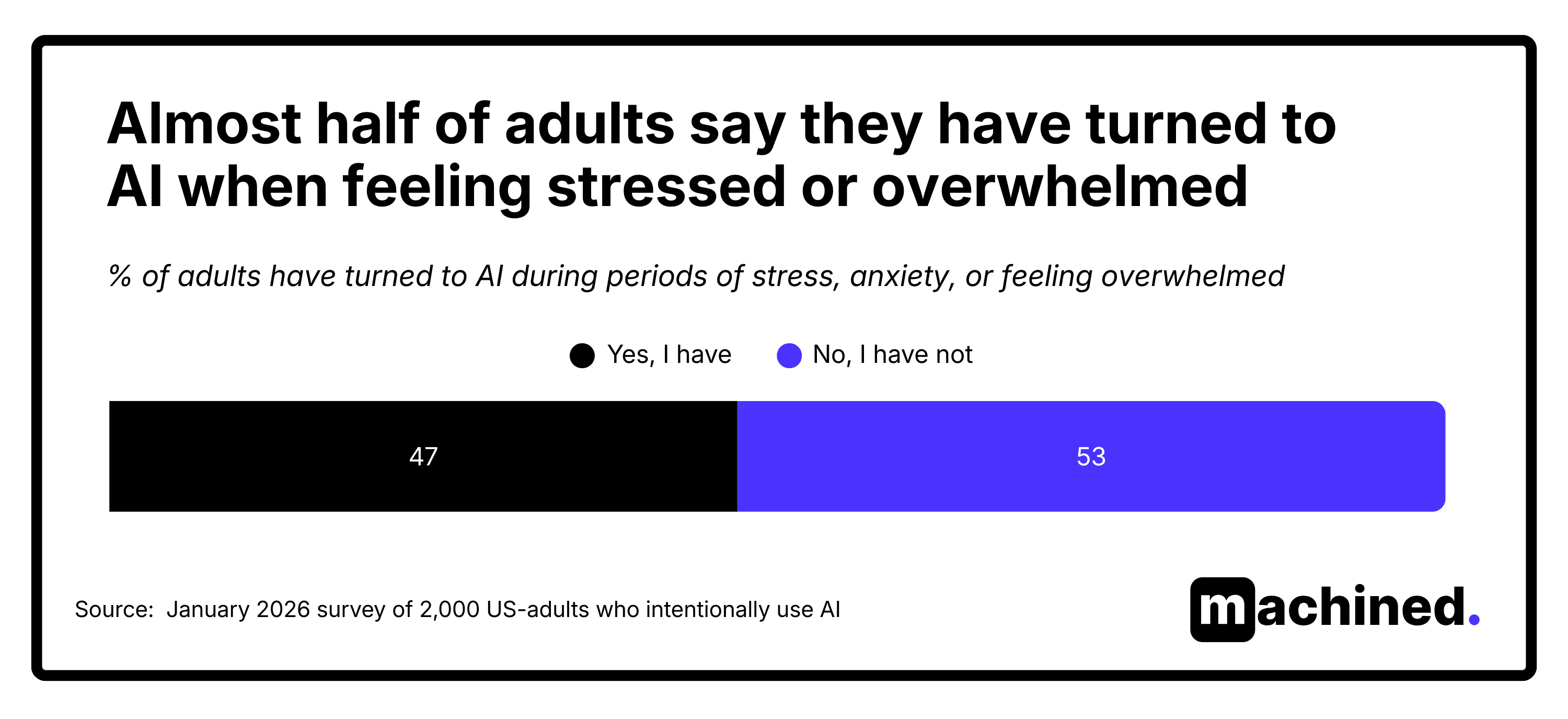
AI is not used only for practical tasks. Nearly half of respondents, 47%, say they have turned to AI when they felt stressed, anxious, or overwhelmed.
Trust In AI and Areas of Hesitation
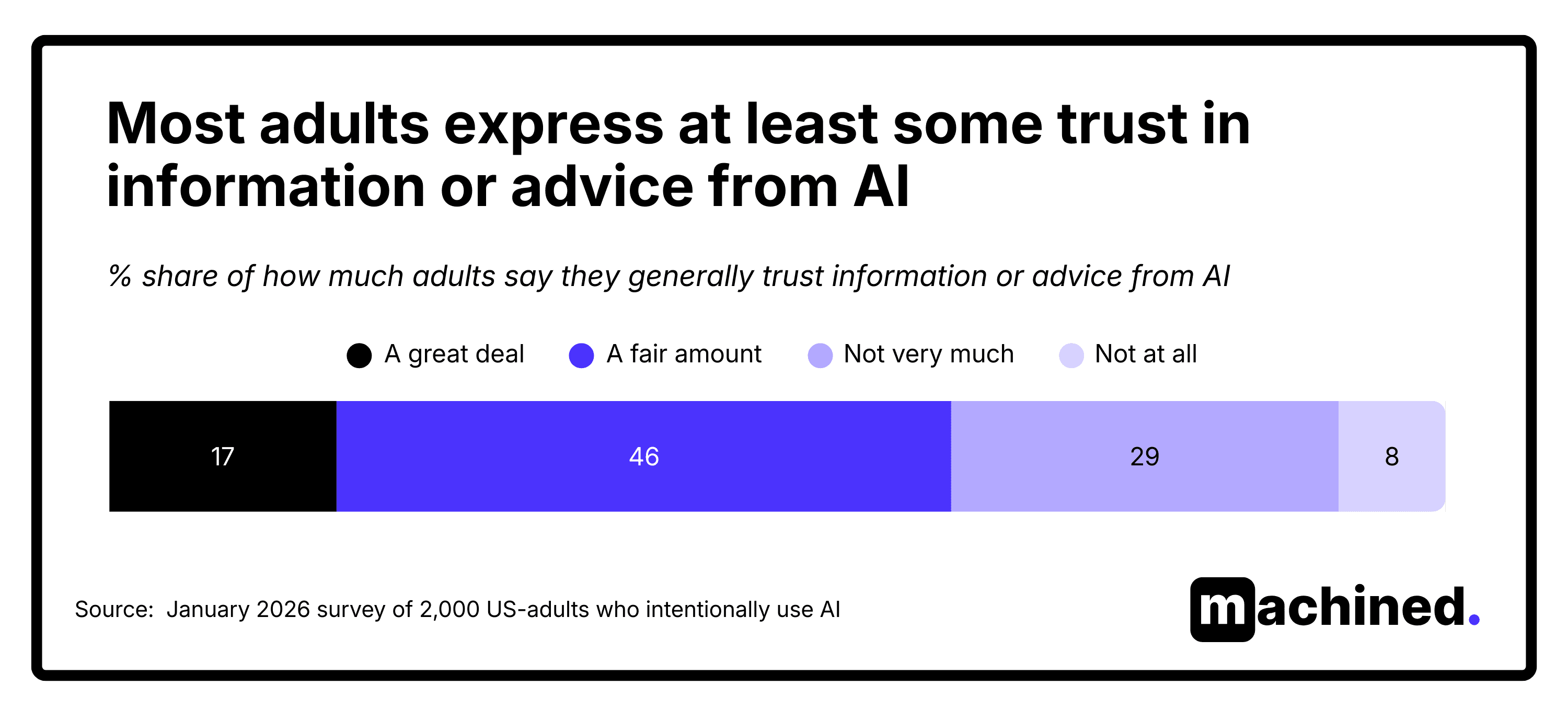
Despite widespread use, trust in AI-generated information remains mixed. Seventeen percent of respondents say they trust information or advice from AI a great deal, and 46% say they trust it a fair amount. At the same time, 29% say they do not trust AI very much, and 8% say they do not trust it at all.
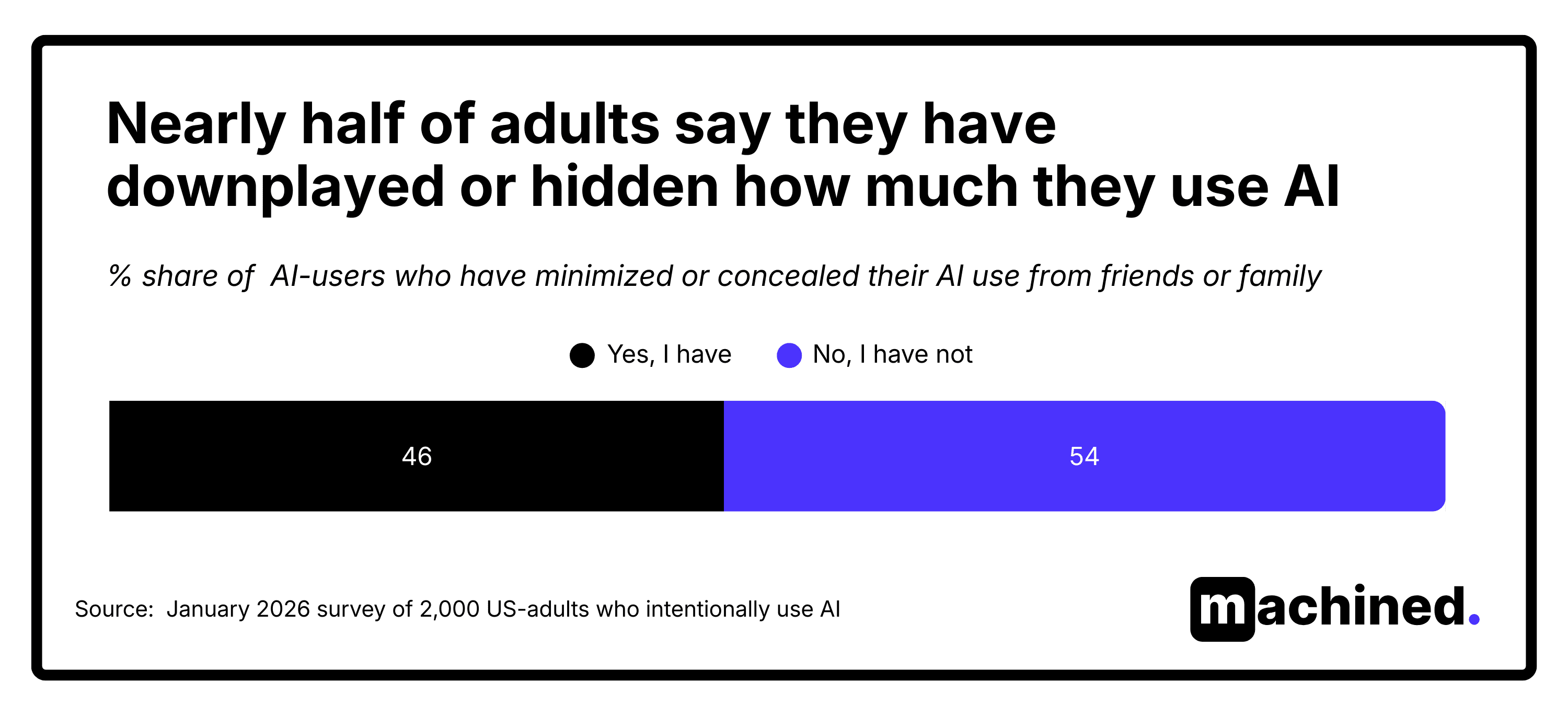
Nearly half of respondents, 46%, say they have downplayed or hidden how much they use AI from friends or family.
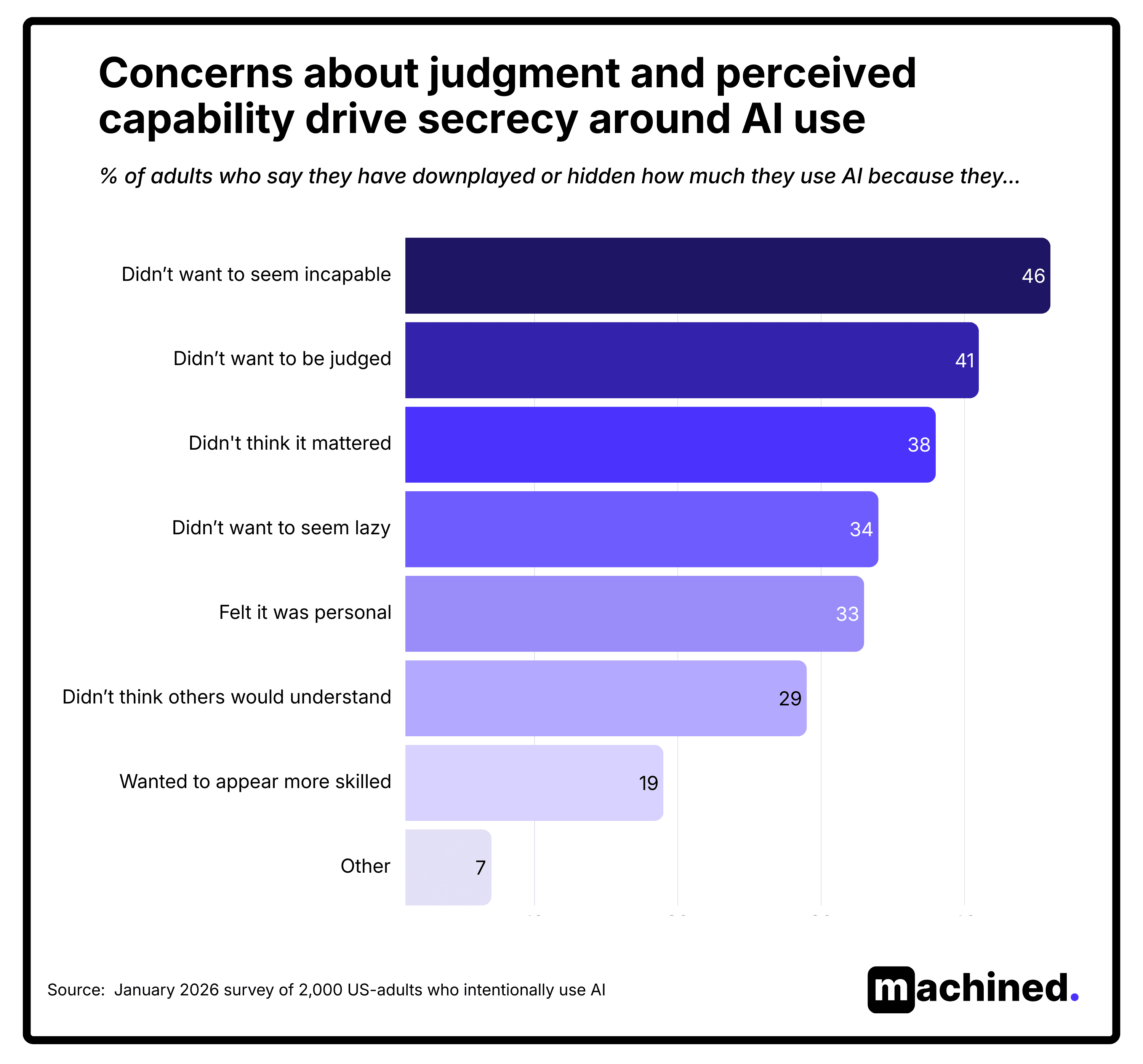
Among those who have done so, common reasons include concern about appearing incapable (46%), fear of being judged (41%), and not wanting to seem lazy (34%). Others say AI use felt personal or private (33%), that it did not seem important to mention (38%), or that people around them would not understand (29%).
Expectations and Concerns About Future AI Use
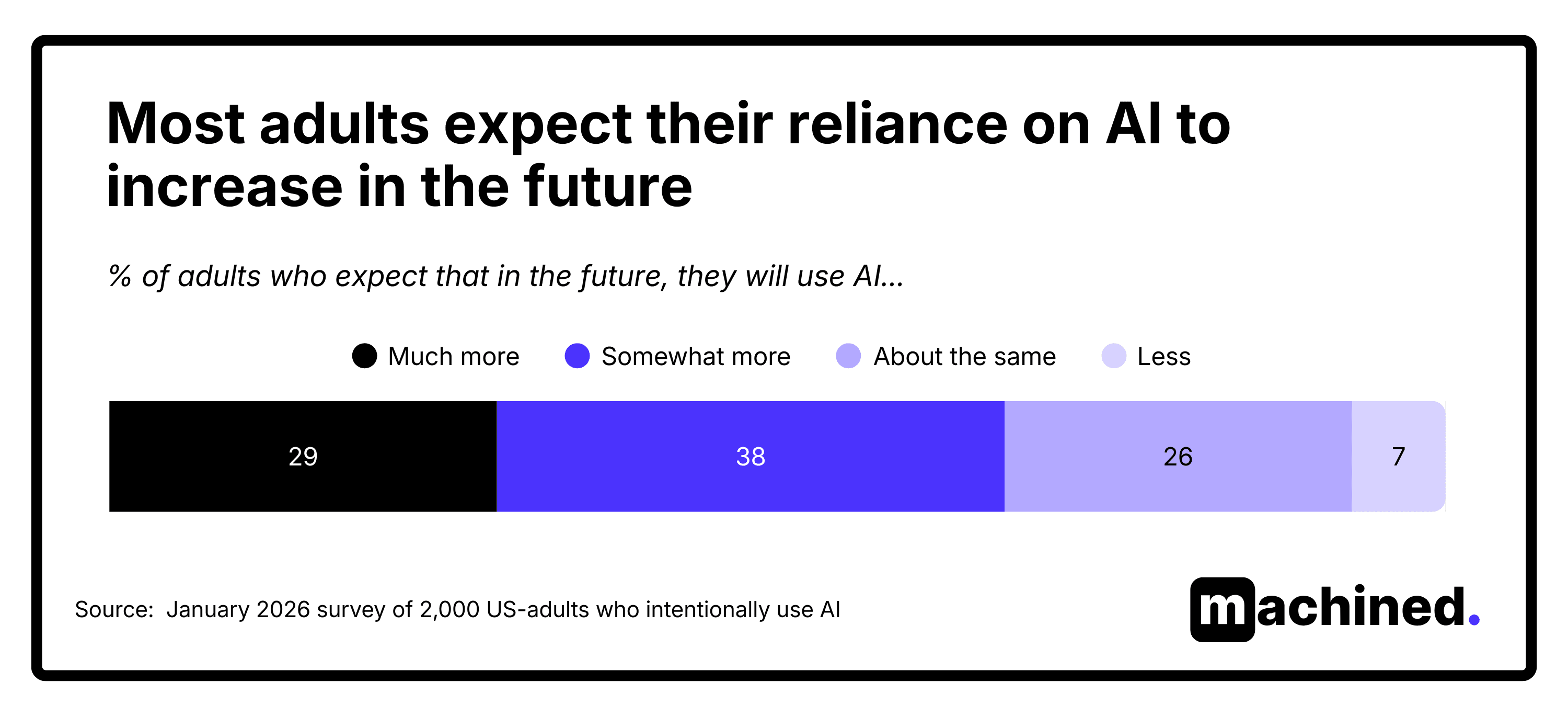
Most respondents expect their reliance on AI to increase. Twenty-nine percent say they expect to rely on AI much more in the future, and 38% say they expect to rely on it somewhat more. About one-quarter expect their use to remain about the same, while 7% expect to rely on AI less.
At the same time, many express concerns about future reliance. Sixty-seven percent say they have at least some concerns about how much they may rely on AI in the future, including 23% who report major concerns. Twenty-six percent say they have no real concerns, while 7% say they are unsure.
Where and How Americans Use AI In Everyday Situations
To better understand where people are most likely to turn to AI, we asked respondents whether they have used AI tools across a range of real-world scenarios, from work and education to health, relationships, and daily decision-making. The charts below show the share of AI users who say they have used AI in each situation.
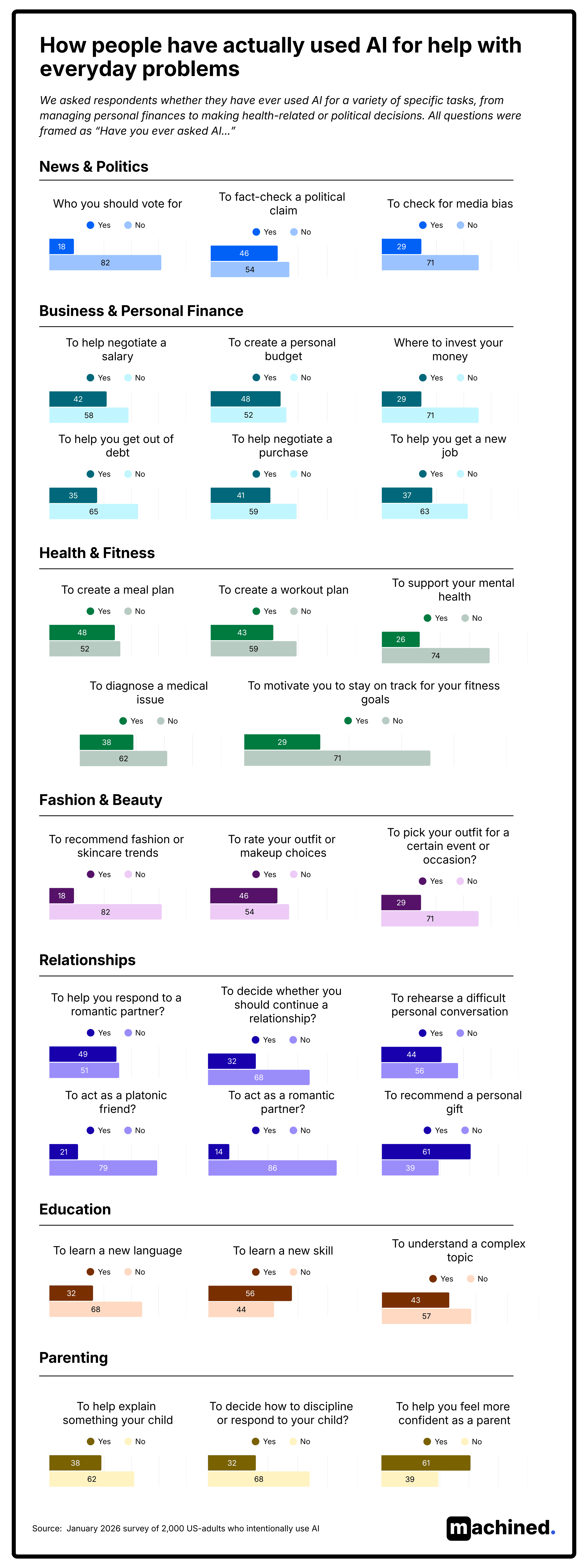
We quickly notice in the above results that people are using AI not only for practical tasks, but largely for making decisions that can affect the trajectory of their lives; often making context-specific decisions about when to involve AI and when to rely on other sources. Usage is highest in areas tied to learning, planning, and low-risk decision-making, and lower in situations where trust, consequences, or personal judgment feel more uncertain, suggesting that while AI is no longer new or unfamiliar, it has not yet become universally trusted across all aspects of life.
Methodology
This survey was conducted in January 2026 among 2000 American adults ranging in age from 18 to 77. Respondents were composed of a nationally representative panel. Participants answered a mix of multiple-choice and select-all-that-apply questions about their AI usage, attitudes, and behaviors across personal, professional, and social contexts. Percentages are rounded to the nearest whole number.
Fair Use
This data may be cited for non-commercial purposes with attribution. If you use these findings or any accompanying visuals, please link back to this page as the original source.
Ben Treanor, contributor to Machined.ai